

Wonderhop
Four free daily trivia rounds in your browser
Four directions to play.
Sky
Find the answer most players would give.
Abyss
Think of a real answer few players would name.
Past
Reach back for the earliest answer that fits.
Future
Look for the most recent answer that fits.
Two valid answers can earn different scores. If more players name your answer, it ranks higher in Sky. A rarer answer ranks higher in Abyss. In Past and Future, the year decides which answer ranks higher.
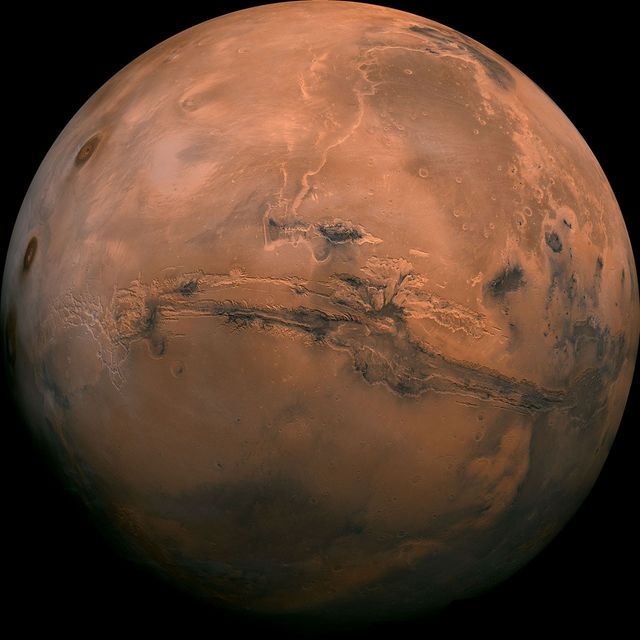
Name a NASA mission
that landed on Mars.
Show a hint
Think about when the lander touched the surface. A mission’s launch date can fall in a different year.
Reveal a Past answer
Viking 1. NASA records its landing on July 20, 1976. Mars Pathfinder landed on July 4, 1997. Of these two missions, Viking 1 ranks higher in Past and Pathfinder ranks higher in Future.
Playing today?
Before you play.
Where can I play the daily game?
Select Play official Wonderhop to open wonderhop.io in your phone or computer browser. Choose a mode and type your first answer. Each day you can play four free rounds of seven questions each, one round per mode. You can start without an account or an app download.
Is there an official daily answer key?
The developers keep the daily answer lists private. After you submit an answer, the game shows how it scored. For a spoiler-free warm-up, open a hint on one of our original practice cards and reveal the example when you’re ready. After question seven, choose See my score, then Review my game to revisit the individual questions.
When do new questions appear?
All four games change at midnight in Montréal. In India, that’s 10:30 a.m. IST when Montréal is on standard time and 9:30 a.m. IST when it’s on daylight time. The reset clock converts the next change to your local time.
Do I need an account to play?
Open the official game in your browser. You can play without signing up and choose a nickname for the leaderboard. On a school Chromebook, use Chrome if your school allows access to wonderhop.io.
What is free, and what does Hop Pass cost?
All four daily modes are free and ad-free. Hop Pass costs US$3 per month or US$9.99 as a one-time purchase and includes unlimited play, past games and all themes.
Can I replay a day I missed?
Hop Pass includes an archive covering the previous 30 days. With free access you can play the current day’s set.
Which languages can I answer in?
You can play in English, French, Spanish, Portuguese, German, Italian, Dutch, Polish or Turkish. Enter your answer in the language you selected.
Can I try again if my answer is rejected?
Read the judge’s short explanation and try another answer before time runs out. You have 30 seconds per question in Sky, Past and Future, and 40 seconds in Abyss. The published rules give a time limit and do not list a fixed number of guesses.
How can I check a disputed year in Past or Future?
Check which event the clue names and the year the game shows after you answer. Wonderhop says dates come from its answer lists, with Wikipedia used for entries outside those lists. To check a disputed year, look up that event in an original source, such as a space agency’s landing record for a mission.
Official rules and Hop Pass details · How Wonderhop dates answers
A question has two parts.
The prompt tells you what counts. The arrow tells you which of those answers to choose.
Start with the category
Suppose the prompt asks for a piece on a chessboard. “Queen” and “rook” both belong there. “Checkmate” is a perfectly good chess term, but it names a position, so it misses the category. Make that check before trying to guess what the rest of the room might say. A rare answer still has to fit every word of the question.
Then look at the arrow
In Sky, picture asking ten friends for the first chess piece that comes to mind. Pick the name you think you would hear again and again. Counting the pawns in a box answers a different question. The game cares about how often people think of a name. In Abyss, keep the same board in mind and try a piece your friends might overlook. You can make a reasoned guess without knowing the survey percentages.
Give a date a job
Past and Future work best when you know exactly what you are dating. Try the Mars card above. Viking 1 landed in 1976. A mission can spend months in flight, so a launch date and a touchdown date may even fall in different years. If you can remember only the decade, compare two candidates first. A 1970s landing belongs further back than a 1990s landing even if you cannot recall the precise day. NASA’s Viking 1 record
Use the time you have
You type a name into the game. Sky, Past and Future allow 30 seconds per question. Abyss gives you 40. If a response is refused, read the feedback while there is still time to try another. For a practice run with no clock, open one of our answer cards, settle on a candidate and then reveal the explanation. Compare your reason for picking it with the one on the card.
Compare notes after the round
If you and a friend picked different valid answers, check that you played the same mode and the same Montréal game date. Ask what made each person think of their answer. Someone who plays in an orchestra might immediately name a contrabassoon. Another player might never have heard one. That difference in recall is what makes the two popularity modes interesting, even after the points are in.
To share a clue with someone still playing, name the category or describe how you chose a direction. Save the actual name and any dates for when they ask for the reveal. Our practice examples keep hints and answers under separate controls so you can do exactly that. Open the practice cards